Meenakshi Radiology

Phone: +91 82485 90535
Address: Near New Bus stand, Tanjore

Prostatic Artery Embolisation (PAE)

We welcome 

Our first batch of DNB Radiology students in Meenakshi hospital, Tanjore

Minimally Invasive Treatment for Benign Prostatic Hyperplasia (BPH)

What is PAE?

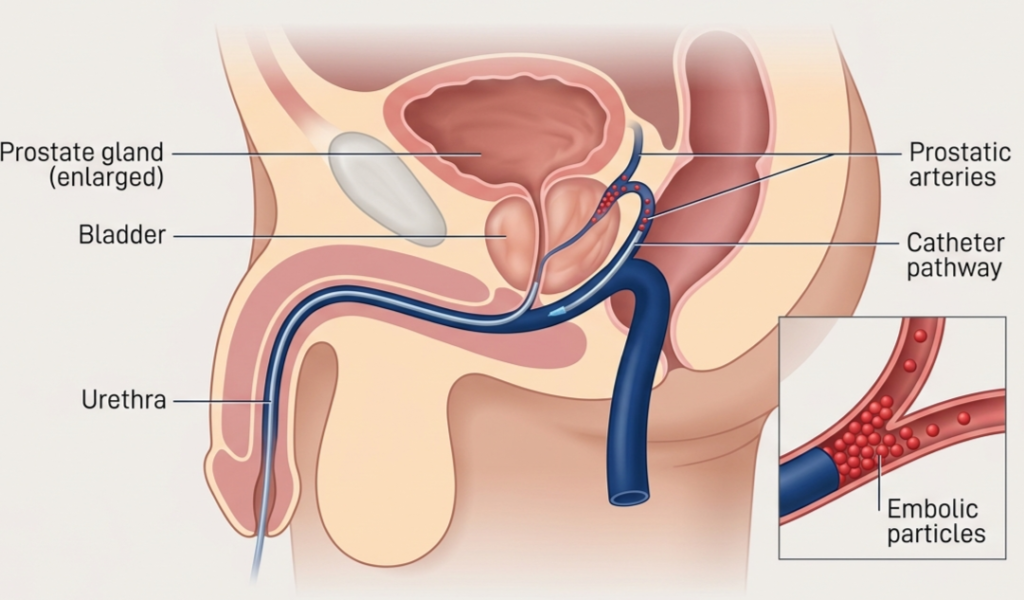
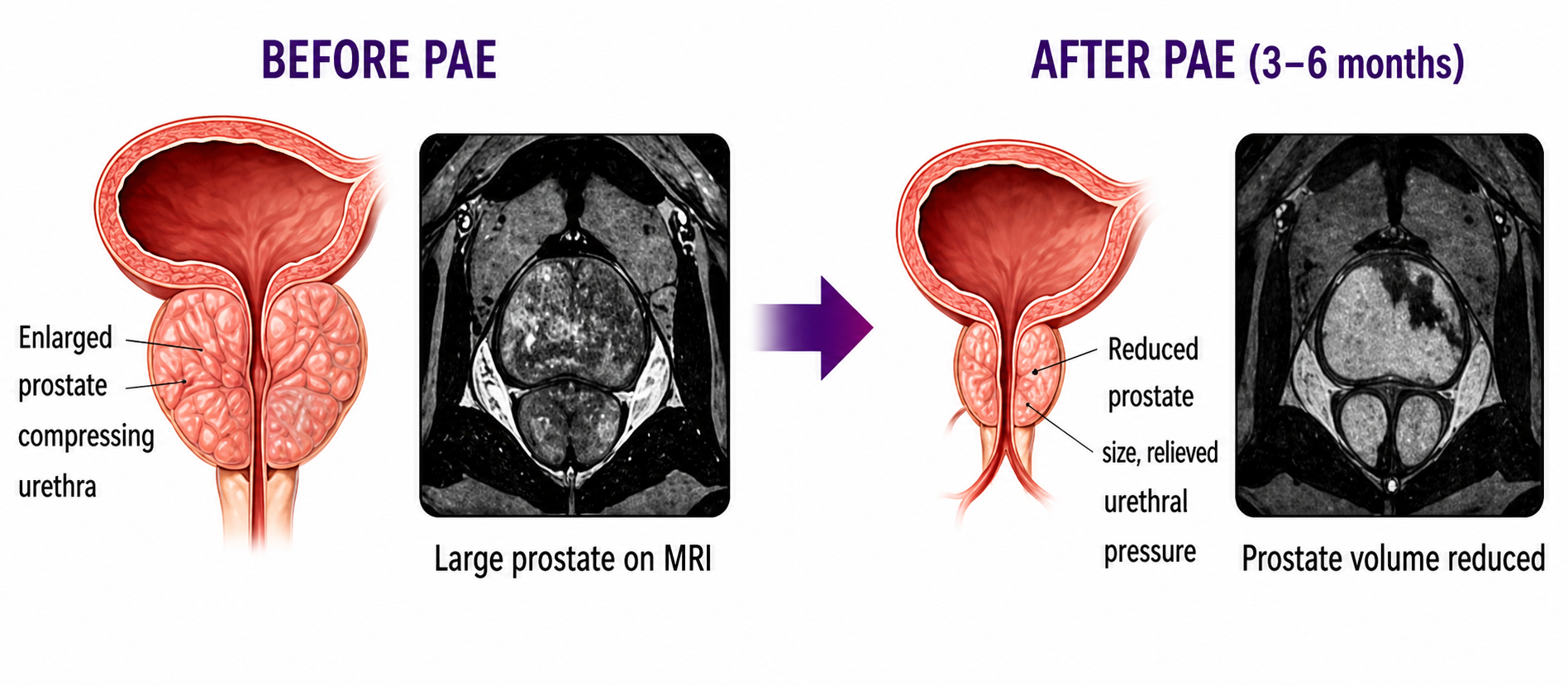
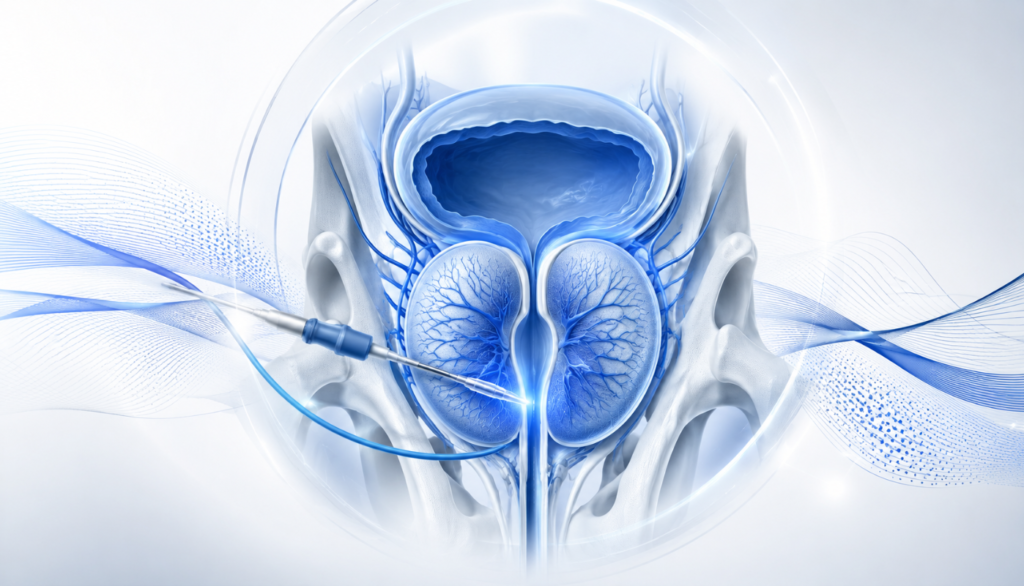
Prostatic Artery Embolisation (PAE) is a minimally invasive, image-guided procedure that blocks the blood supply to the prostate using tiny particles, causing the prostate to shrink and relieve urinary symptoms caused by BPH.

Diagram Labels

Indications

PAE Procedure: Step by Step

PAE

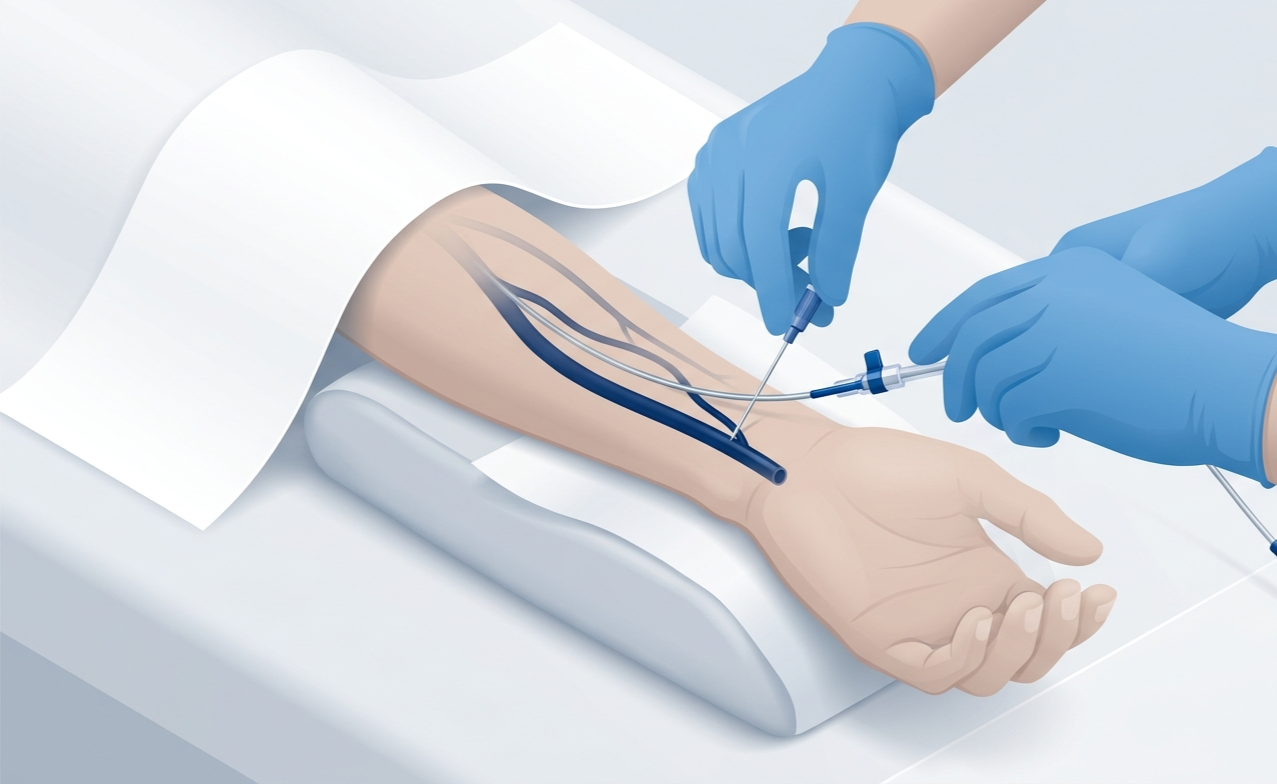
01.Vascular Access

1

Local anaesthesia is given and the common femoral artery is punctured. A catheter is inserted.

Jan

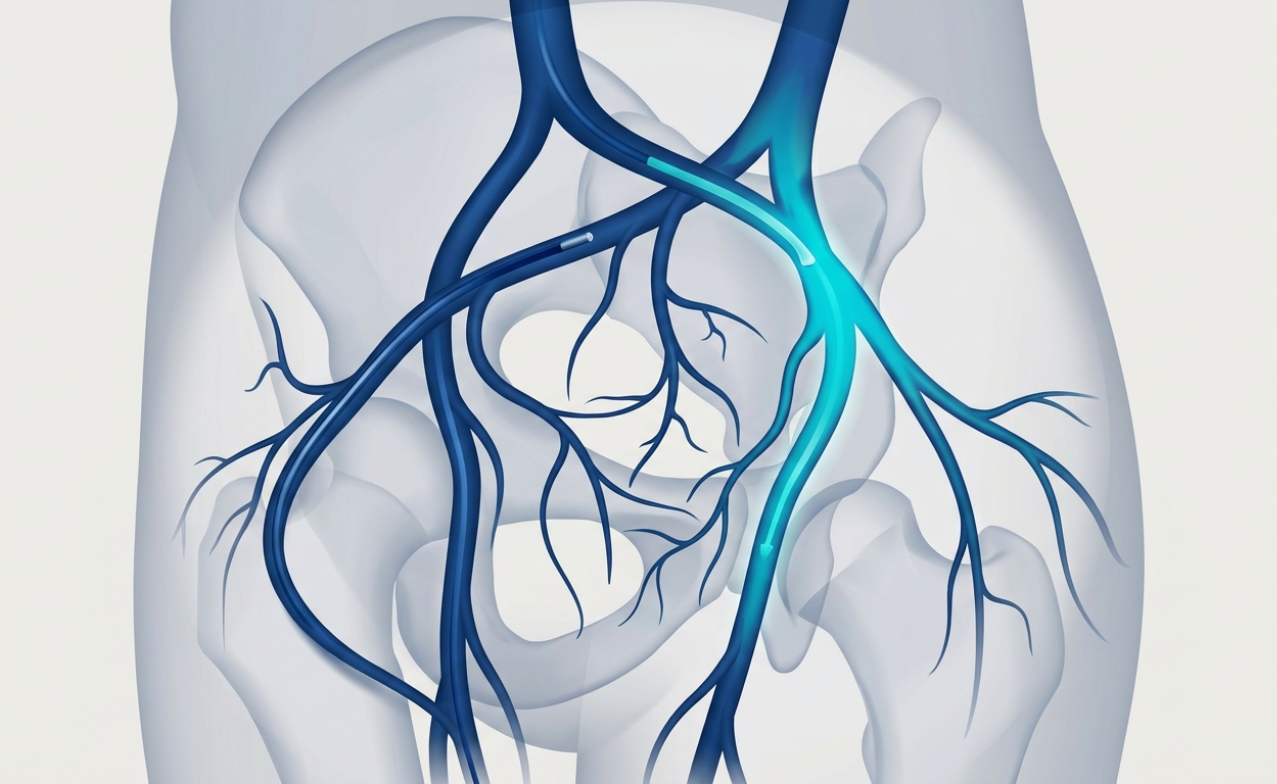
02.Catheter Navigation

2

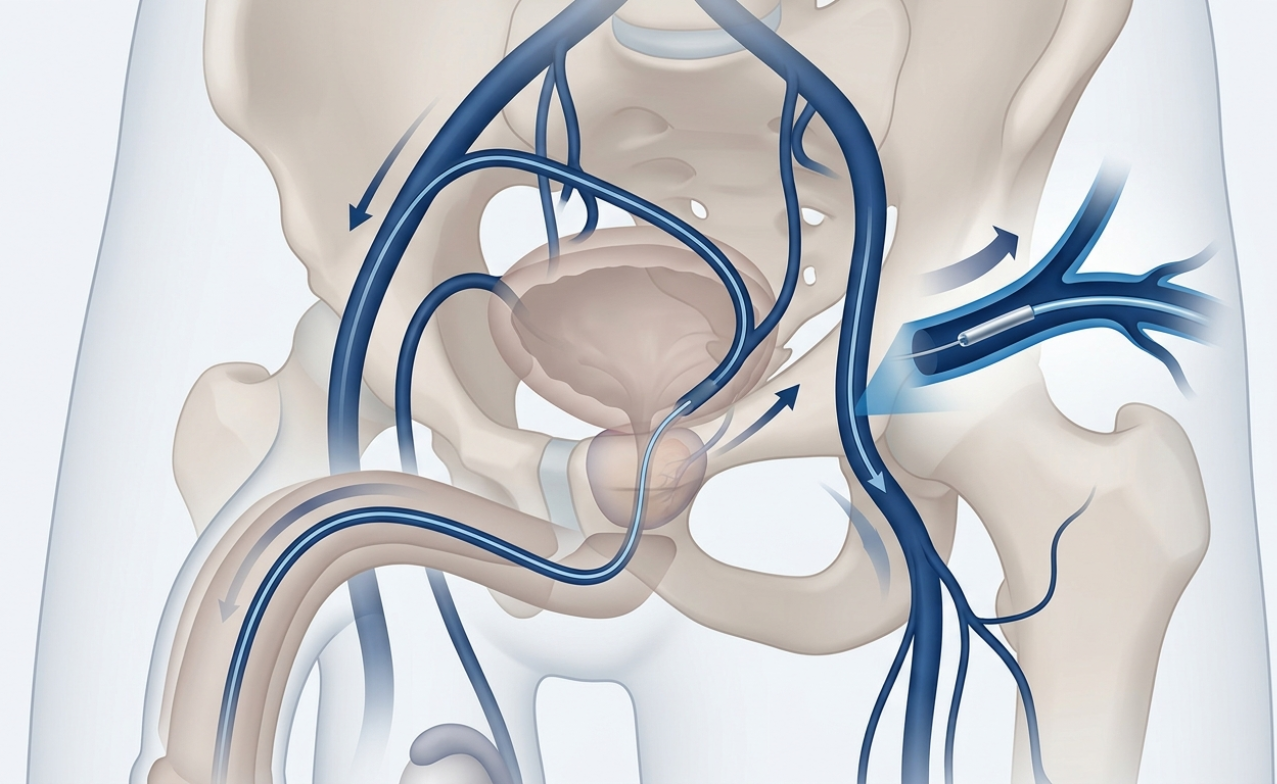
The catheter is navigated through the aorta into the internal iliac arteries on both sides.
Jan

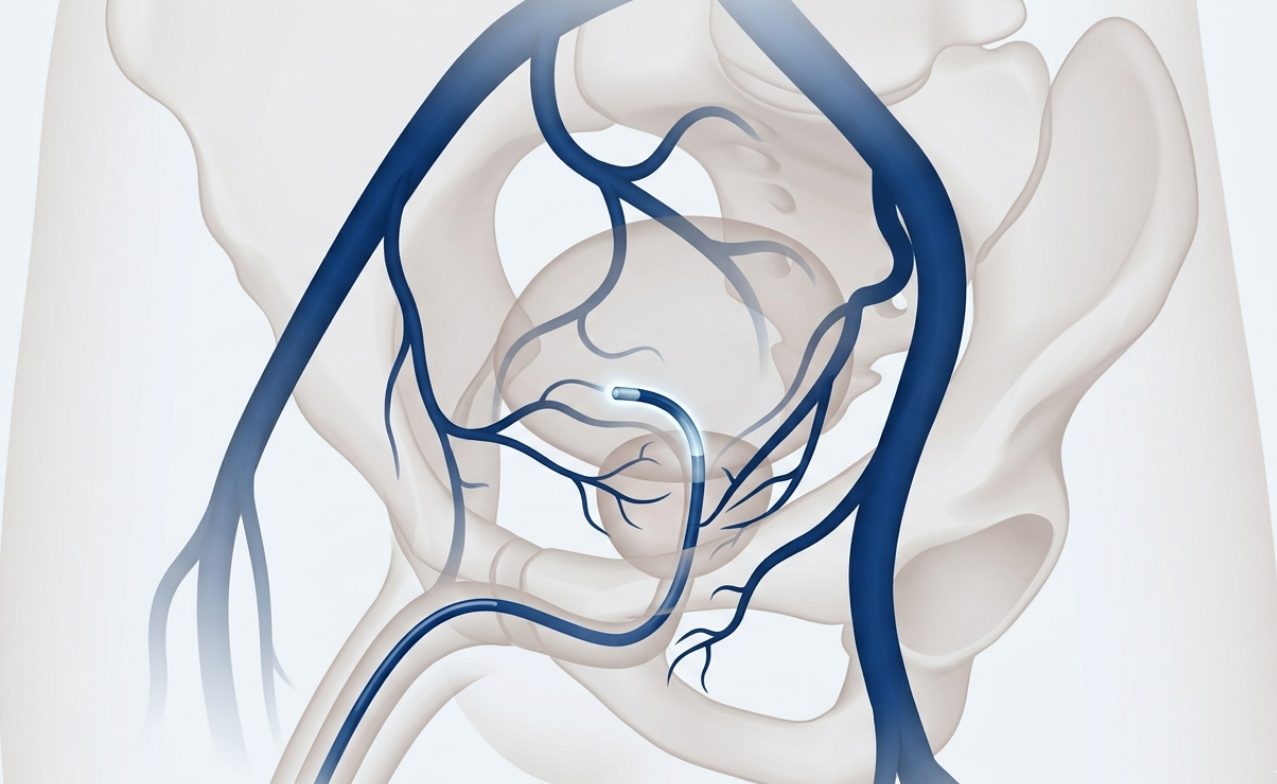
03.Angiography

3

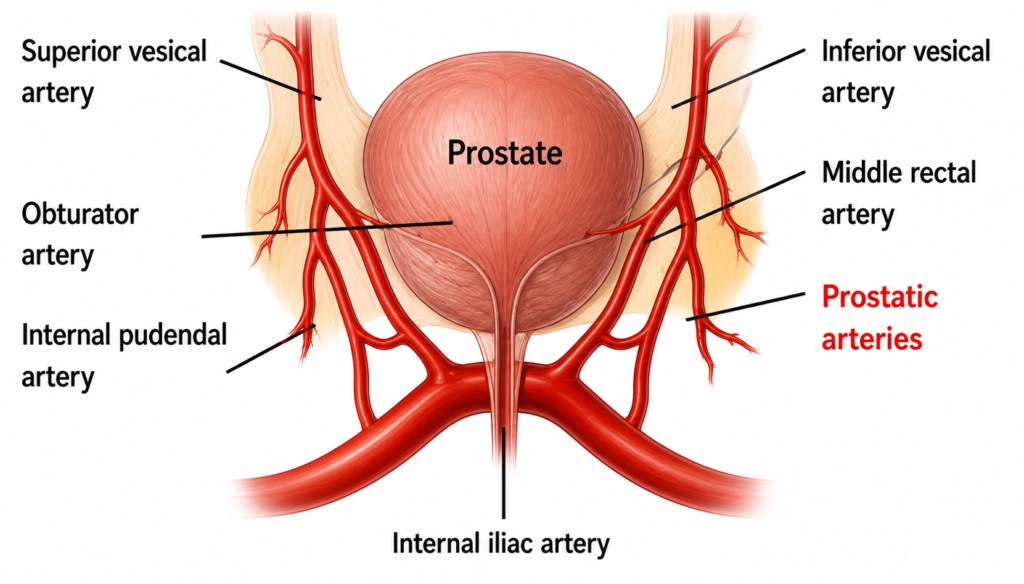
Contrast dye is injected to identify the prostatic arteries arising from the internal iliac arteries.
Jan

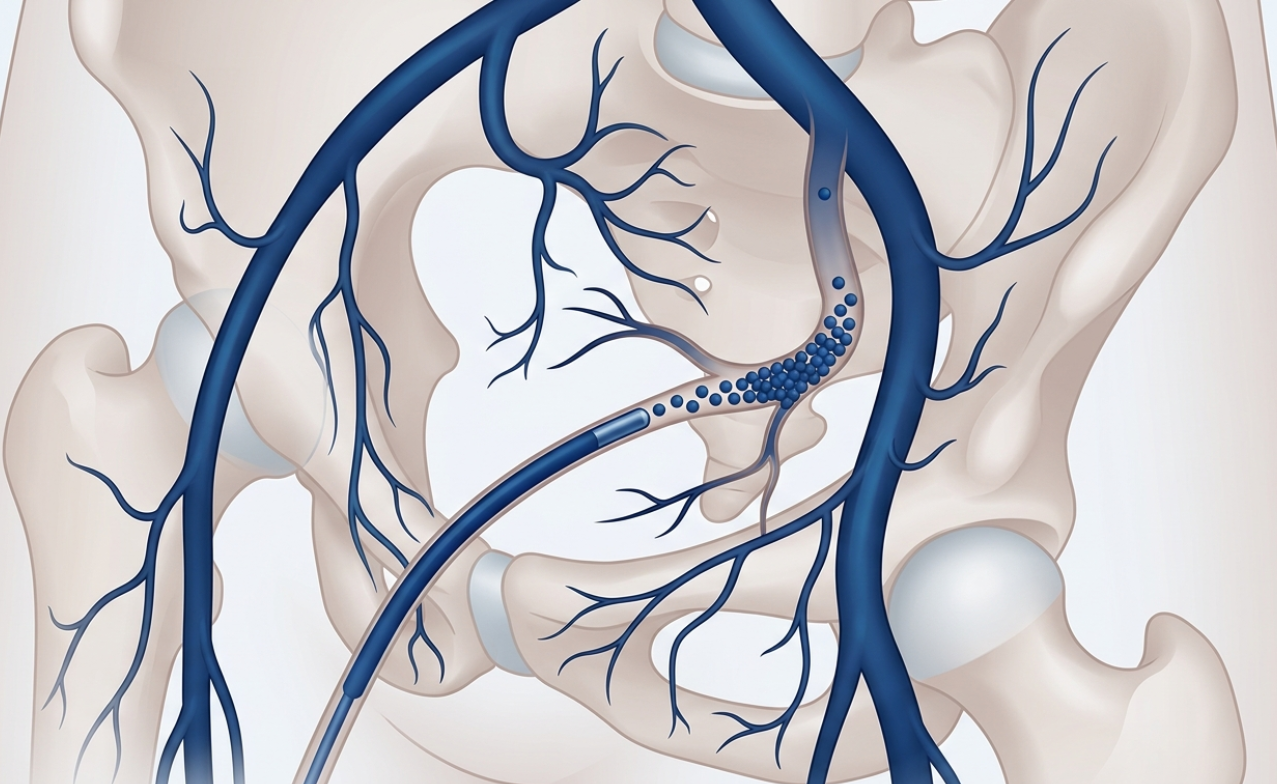
04.Catheter Positioning

4

The microcatheter is selectively advanced into the prostatic artery supplying the prostate.
Jan

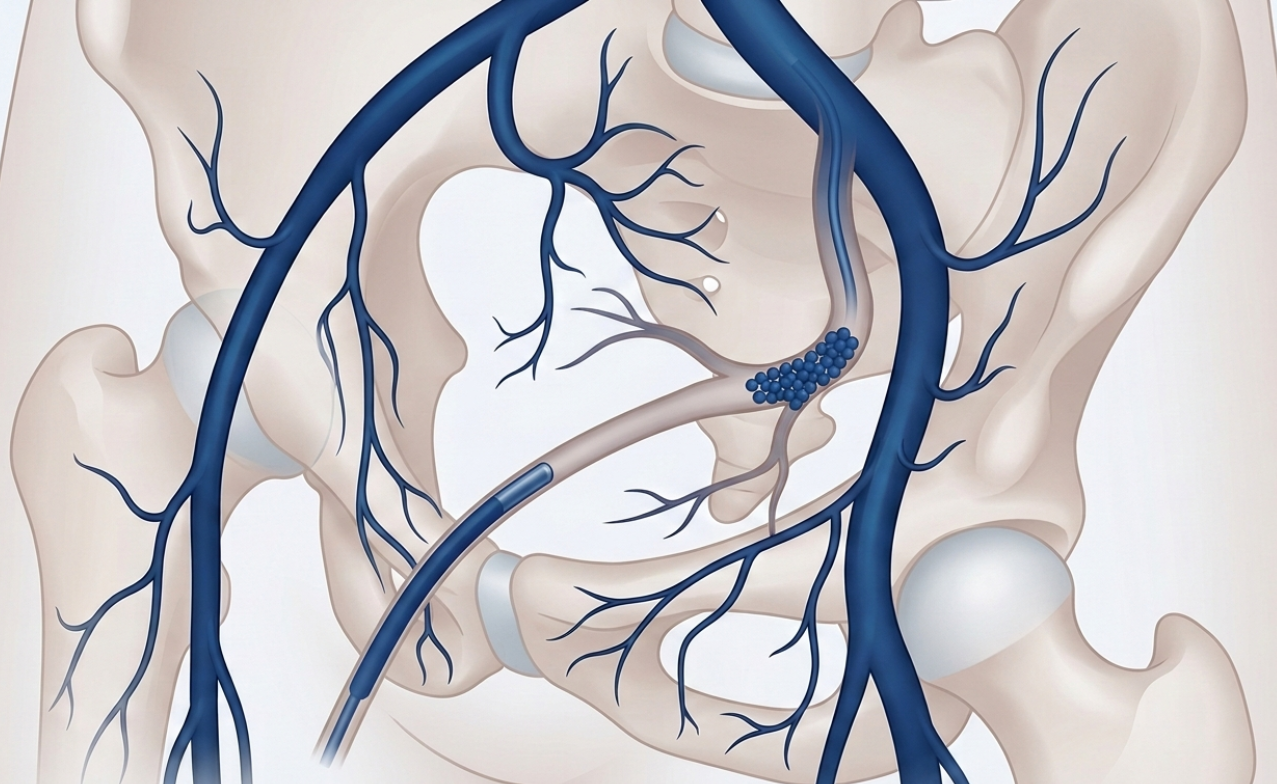
05.Embolisation

5

Embolic particles are injected to block blood flow to the prostate, causing it to shrink over time.
Jan

06. Completion

6

Post-embolisation angiogram confirms reduced blood flow to the prostate.

Jan

Contraindications

ADVANTAGES

Minimally invasive (no cuts or general anaesthesia)
Preserves sexual function (very low risk of retrograde ejaculation)

Short hospital stay (usually 1 day)

Quick recovery and return to normal activities

Effective symptom relief

Suitable for large prostates

Low complication rate

Can be performed in patients who are poor surgical candidates

Repeatable if symptoms recur

Prostatic Arterial Supply
(Common Sources)

Symptoms of BPH​

Frequent urination
Night time urination (Nocturia)
Weak urine stream
Straining to urinate
Incomplete emptying
Urgency

Before & After PAE

Good Candidate for PAE

Possible Complications (Uncommon)

Important Advice

Note